How to Put Together a Streetwear Outfit for Men?

Quick answer
Friday, 7 pm: half your wardrobe is lying on the bed, and nothing goes together. This is how you can build a streetwear outfit for men: one piece that stands out, trousers that give the shape, shoes that match the width of the trousers, and colours you choose on purpose. The rest is fine-tuning.
Streetwear outfit at a glance
- Start: one piece that stands out, or several at once
- Shape: wide on top and straight below, or short on top and wide below
- Trousers: give the shape, and settle into soft folds on the shoe
- Shoes: under wide trousers, a thick sole stays visible
- Colours: a few look calm, many look loud, both work
- Layers: every layer on top is a touch wider than the one beneath
- Extras: a cap and a chain, for example, as many as you like
- Budget: money into shoes, trousers and jacket, save on trend pieces
Quick questions
What goes into a streetwear outfit for men?
A top with character, usually a T-shirt with a print. Add fairly wide trousers such as jeans, cargo trousers or work trousers, and sneakers. A jacket, cap and chain come in depending on the weather.
Which shoes go with streetwear?
Sneakers almost always work. Under wide trousers, shoes with a thick sole stay clearly visible, under straight trousers flat models do too. In winter, boots work.
Which trousers go with streetwear?
The easiest option is a straight or wide pair of jeans in blue or black. Cargo trousers and work trousers work too. Very tight trousers under a wide shirt create a strong contrast: lots of fabric on top, little below.
How many colours should an outfit have?
As many as you want. Two quiet ones such as black, grey, white or denim blue, plus one that stands out, look clear. With more colours, the look gets more colourful.
Can you still wear streetwear at 30 or 40?
Yes. Streetwear has no age, you wear it as quiet or as loud as you like.
In detail: building blocks, formulas, styles
Back to Friday’s bed. Usually no piece is missing. What’s missing is a plan. What streetwear actually is and where it comes from is covered in What Is Streetwear?. Here, it’s only about getting dressed.
What goes into a streetwear outfit? The five building blocks
Most streetwear outfits are made up of five building blocks. Once you know them, there’s no more guessing in the morning.
The top: this is where the look begins
In streetwear, the T-shirt is at the centre. It is usually cut wide. Oversized means wide and normal length, with the shoulder seam sitting lower than on a normal shirt, as with our Oversized T-Shirts. Boxy means wide and a little shorter.
With a wide shirt, the weight of the fabric makes a big difference. The weight is often on the label as GSM, meaning grams per square metre. From about 250 GSM, the fabric falls straight down. A thin shirt, on the other hand, clings to your stomach.
The trousers: they make the shape
The shirt catches the eye first. But the trousers give the shape. A straight pair of jeans is an easy start. Wide jeans, cargo trousers (trousers with big pockets on the sides) and work trousers in sturdy cotton work just as well.
Where the trousers end changes the look. If they rest on the shoe, a few soft folds form just above it, which the scene calls a stack. If the hem drags along the ground, the fabric wears out faster there.
The shoes: the foundation
Under a lot of fabric, a flat, narrow shoe almost disappears. A shoe with some mass holds its own and stays visible. Which effect you want is your call.
White is the easiest shoe colour, because it goes with everything. One example is the Nike Air Force 1. It came out in 1982 as a basketball shoe. Its thick sole holds its ground even under wide trousers. Flatter is the adidas Samba. It was designed in 1949 so that footballers could train on frozen ground. Under straight jeans it stays clearly visible, under very wide trousers it almost disappears.
The layers: shirt, hoodie, jacket
Layering means wearing several layers on top of each other. The most comfortable way goes like this: thinnest inside, thickest outside. And every layer is a touch wider than the one beneath, otherwise it pulls at the arms.
The most useful piece for this is an overshirt. That’s a thick shirt you wear open, like a light jacket. It goes over any T-shirt and under almost any jacket.
The accessories: as many as you want
Cap, beanie, chain, bag, socks. Two of them set an accent, with more the look gets fuller and bolder. Only silver or only gold looks calm, both together bring more shine to the outfit. How much is up to you.
Proportions: which shape suits your outfit?
The silhouette is the outline your outfit makes from a distance. Three shapes show up especially often.
- Wide on top, straight below: oversized shirt, straight jeans, sneakers. An easy start, because only one piece is wide.
- Short on top, wide below: a boxy shirt down to the hip, with wide trousers. The legs look longer, because the trousers become visible higher up.
- Wide on wide: shirt and trousers are both wide. The look becomes full and loose. It gets more contour with, for example, a piece of shirt tucked into the waistband at the front and shoes with a thick sole.
How to tuck a shirt halfway into your trousers is covered in How to Wear an Oversized T-Shirt. It also explains what changes depending on where the hem ends.
Cut and build: a few ideas
- On the shorter side: boxy shirts, and trousers and shoes in the same colour, make the legs look longer, if you like that.
- Tall and slim: wide on wide and extra long shirts have plenty of room to fall on you.
- On the broader side: heavy fabric falls straight down, thin fabric sits closer to the body. Straight trousers look calmer, very wide ones more relaxed. You choose what you like.
Streetwear colour combinations: quiet or loud
With few colours, say two quiet ones and one loud one, an outfit looks clear. With many colours, it gets colourful and loud. Both work.
- Quiet: black, white, grey, denim blue, beige, olive
- Loud: pink, yellow, red, neon green, orange
One small touch: if you repeat the loud colour once, very small, for instance in the logo on your cap, it looks planned rather than accidental.
The simplest version is tone on tone. That means everything in one colour, just in different shades. Grey on grey or black on washed black looks tidy, because the eye finds no hard edge. The shoes then provide the contrast.
One loud piece or several
A loud piece gives the eye a point to settle on. That can be a big print, a strong colour, eye-catching sneakers or a special jacket. With two or three loud pieces, the outfit gets wilder. How loud is up to you.
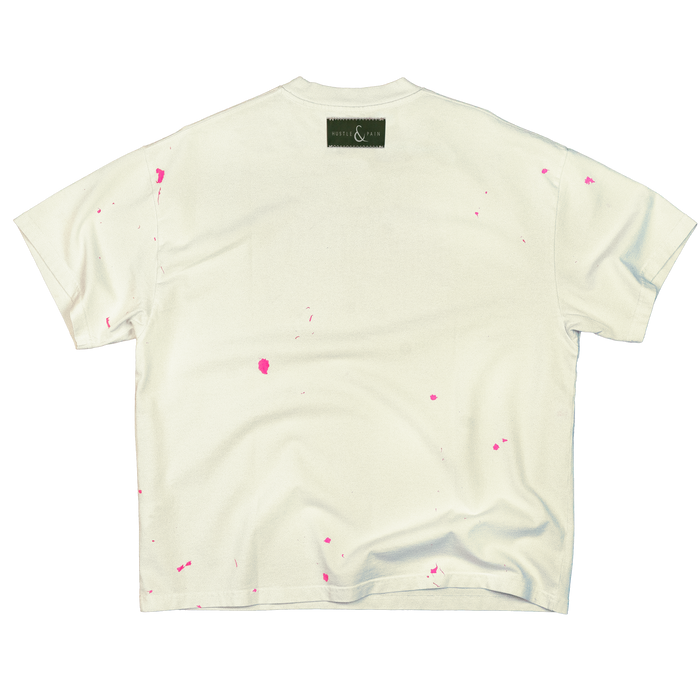
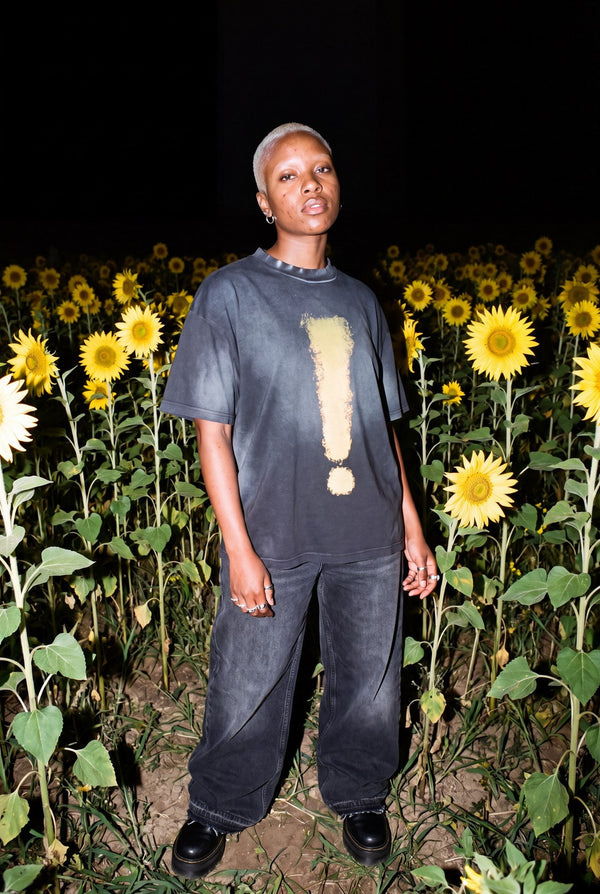
Here’s how that looks in practice. ANTAGONIST has pink lettering and pink paint splashes. Pair it with blue jeans and white sneakers, for example, and pink stays the only colour. ENERGY is washed black with a yellow exclamation mark. Here too, the rest can stay dark.
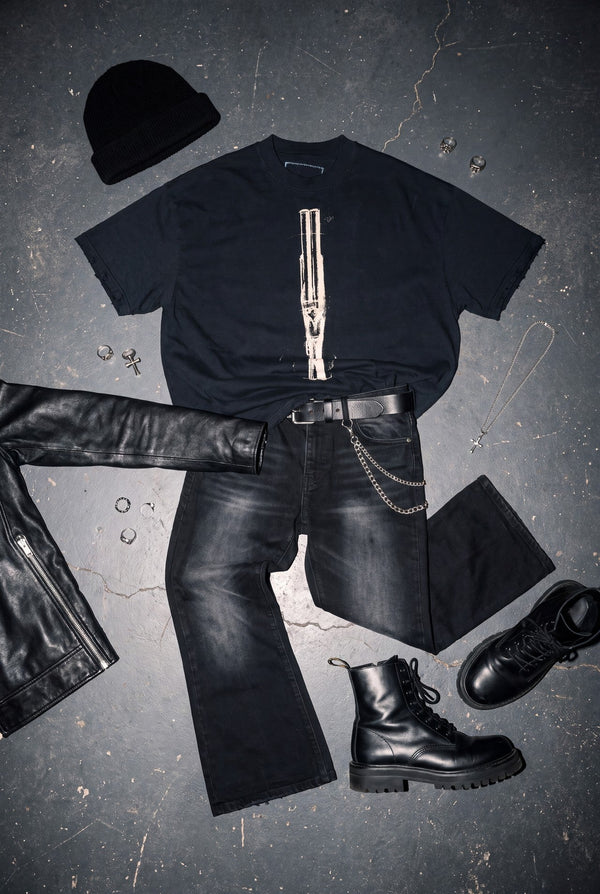
It works the other way round as well. If your sneakers are the loud piece, a quiet black shirt like SHOTTIE goes well, for example. It has just a narrow, light motif on the chest. You’ll find shirts with a motif in the Graphic Tees.
Streetwear outfit ideas for men: 9 formulas to copy
All the formulas work for women too, our shirts are unisex. Take them as a starting point and swap out individual pieces.
Casual: jeans, sneakers, shorts
- The easy start: SHOTTIE in black, straight blue jeans, white sneakers, black cap. It always works, because only black, white and blue appear.
- Short and wide: PRICE OF FAME in concrete grey, wide black jeans, sneakers with a thick sole. The boxy shirt is a little shorter, which is why the legs look longer.
- Summer: ENERGY in washed black, wide shorts ending just above the knee, white socks, flat skate shoes. The yellow exclamation mark is the only colour in the outfit.
Dark: black, leather, open shirt
- All black: SHOTTIE, black straight jeans, black leather boots, a silver chain. Only the narrow motif on the shirt and the chain are light, which is why both stand out.
- Shirt open on top: ANTAGONIST under an open black shirt, dark jeans, black sneakers. The pink lettering only flashes through in the middle.
- With a leather jacket: ART OF LIFE is a slim white shirt with a red heart on the back. Over it, a black leather jacket, with wide black jeans and boots. Indoors, with the jacket off, the heart shows.
Autumn and winter
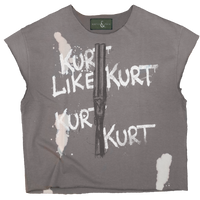
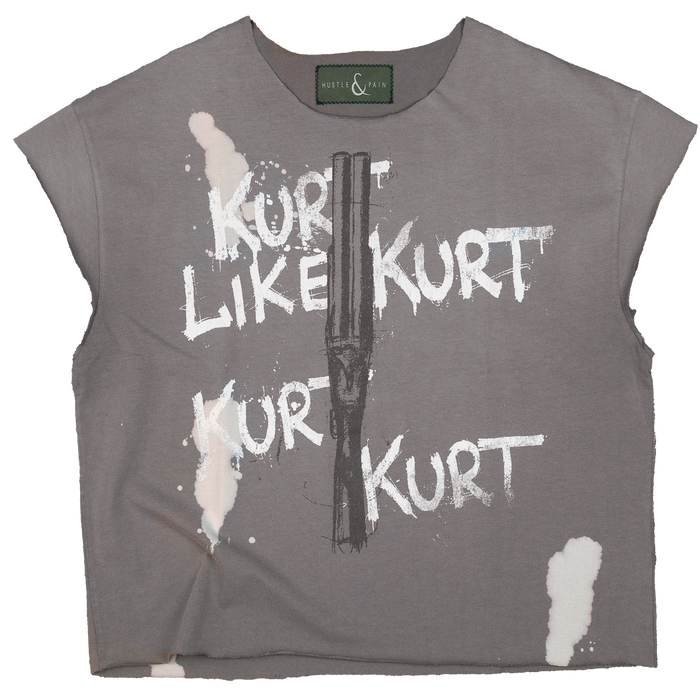
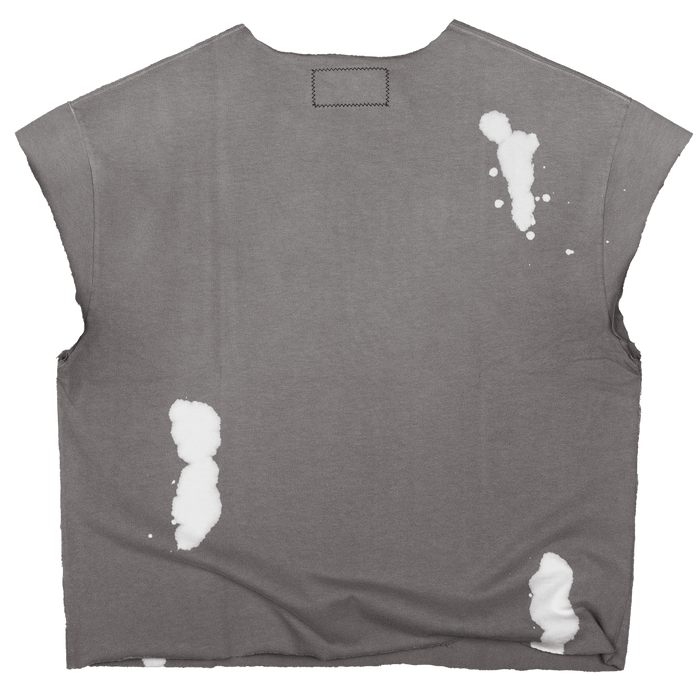
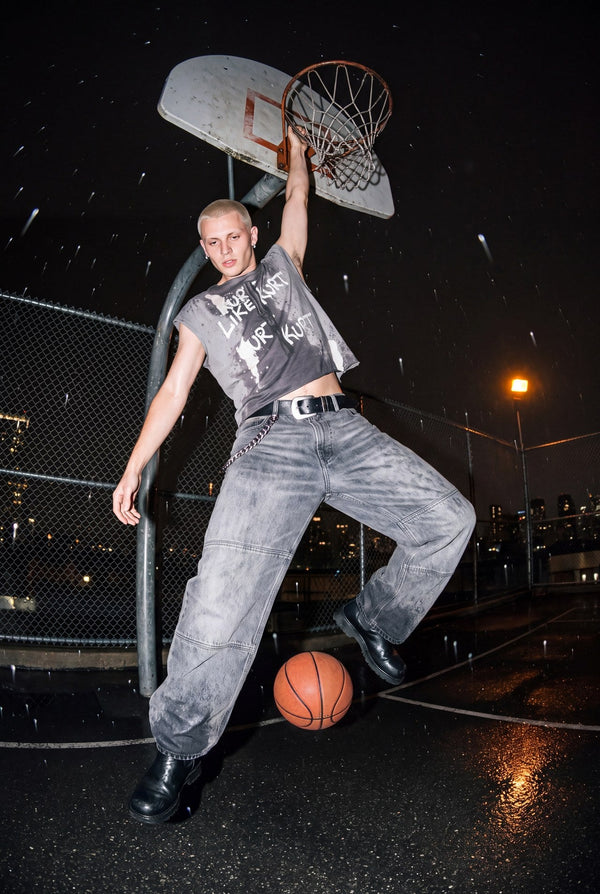
- With an overshirt: LIKE KURT in grey with bleached stains, an open green corduroy overshirt, straight jeans, brown boots, beanie. Grey and green get along, because both are muted.
- Long sleeve underneath: FUGITIVE with bleached stripes over a thin grey long sleeve, wide black trousers, sneakers with a thick sole. The stripes are the pattern, everything else here is plain.
- With fleece: ENERGY with a fleece jacket over it, wide cargo trousers in olive, trail shoes (running shoes for off-road terrain). That’s gorpcore, more on it in the next section.
Streetwear styles explained: skate, hip-hop, workwear, luxury, gorpcore
The word streetwear covers several smaller styles. Each one has its own formula.
Skate: wide and flat
Skaters need trousers they can move freely in. And flat shoes that let them feel the board under their feet. Vans is a shoe brand from California. In the mid-seventies it brought out the Old Skool, the shoe with the stripe on the side. Formula: wide jeans or work trousers, T-shirt, flat skate shoes, beanie.
Hip-hop: big, sporty, with jewellery
Run-DMC was a rap group from New York. In the eighties, the three of them went on stage in ordinary street clothes rather than stage outfits. With them came adidas Superstars, often worn without laces. Formula: wide shirt or jersey, wide jeans, basketball sneakers, a chain.
Workwear: clothing from the building site
Carhartt was founded in Detroit in 1889 to clothe workers. Dickies comes from Fort Worth, Texas, and started in 1922. Their trousers and jackets are made of sturdy fabric that can take a lot. That’s why people who have never set foot on a building site wear them today too. Formula: beige or brown work trousers, T-shirt, work jacket, boots or skate shoes.
Luxury: quiet colours, expensive fabrics
Luxury streetwear often looks quieter than the regular kind. One example is Fear of God, the brand of the Los Angeles designer Jerry Lorenzo. According to a profile in GQ, it works with pale green, sand grey and worn-in denim. Formula: tone on tone in beige or grey, a wide shirt without a big logo, simple leather sneakers.
Gorpcore: hiking clothes in the city
Gorpcore means wearing outdoor clothing in everyday life. So fleece, technical jackets and trail shoes from brands like The North Face, Arc'teryx or Salomon. The word first appeared in 2017, in The Cut, the fashion blog of New York Magazine. In the US, gorp is a hiking snack, often made of raisins and peanuts. Formula: T-shirt, fleece or a light rain jacket, wide cargo trousers, trail shoes.
A tip for all five styles: mix two pieces from one direction with the rest of your clothes, or go all the way into one style. Either way, it’s your look.
Six things that change a streetwear outfit
- Lots of loud pieces. A big print, colourful shoes and patterned trousers together make the look loud and wild. The eye wanders from piece to piece.
- The length of the trousers. If the hem drags on the ground, the fabric wears out there. If that bothers you, an alterations tailor can shorten them, which costs less than a new pair.
- Wide trousers, flat shoe. Under a lot of fabric, a flat shoe almost disappears. A shoe with a thick sole stays visible.
- A thin shirt in a wide cut. Light fabric clings to the body and shows every crease. Heavy fabric falls straighter.
- Everything from one brand. The same logo from head to toe shows who you stand with. Mixed brands, old and new pieces add up to a mix all of your own.
- The width of the jacket. If it is tight over a wide shirt, the shirt bunches up in the sleeve and forms lumps. A wide jacket has room for it.
Budget: where you can save on a streetwear outfit and where you can’t
Expensive is not automatically good. In 2025, Stiftung Warentest (Germany’s consumer-testing foundation) published a T-shirt test from France. In it, a sports shirt from Decathlon for €4 was rated Good. In the 2020 GQ profile, by contrast, a T-shirt from Fear of God costs $395. What matters more than the price is how often you wear a piece and how much it shows.
This is where more money pays off:
- Shoes: you wear them almost every day, and cheap soles wear flat quickly.
- Trousers: they give the shape. One pair of jeans that fits well rescues ten outfits.
- Jacket: in winter, it is often the only part of your outfit people see.
- The loud piece: a shirt with a print is the centre of attention. Fabric and print have to survive a lot of washes.
This is where you can save:
- Everything underneath: long sleeves under the shirt, simple hoodies under the jacket.
- Trend pieces: anything that is only in for one season can be cheap.
- Small stuff: cap, beanie, socks.
- Second-hand: jeans and work jackets often look even better worn than new.
How many pieces you need in total is covered in Capsule Wardrobe. You’ll find all our cuts in the Streetwear T-Shirts.
And Friday’s bed? Pick a shirt, a pair of trousers and a pair of shoes, plus as much colour and as many extras as you like. The rest can go back in the wardrobe.
Sources10
- Stiftung Warentest: T-Shirts im Test, von ausgezeichnet bis eingelaufen (29 November 2025, in German, test by Que Choisir)
- GQ: How Jerry Lorenzo's Fear of God Is Reinventing Luxury American Fashion (22 October 2020, English)
- Wikipedia: Nike Air Force 1 (English)
- Wikipedia: Adidas Samba (English)
- Wikipedia: Vans (English)
- Wikipedia: Run-DMC (English)
- Wikipedia: Adidas Superstar (English)
- Wikipedia: Carhartt (German)
- Wikipedia: Dickies (English)
- Wikipedia: Gorpcore (English)
From the article

Keep reading
-
 Style11 minWhat Is Gothic Streetwear?
-
 Style13 minWhat Goes with a Black T-Shirt?
-
 Style13 minWhat Goes with a Grey T-Shirt?