Which German Streetwear Brands Are Worth It?

Quick answer
In the early nineties, a small Berlin screen-printing shop printed band shirts, among others for Einstürzende Neubauten. In 1994 the printers turned that into a brand of their own, Iriedaily. Which German streetwear brands are worth your money depends on what you’re after: Carhartt WIP for workwear, Cleptomanicx and Iriedaily for the skate scene, Acronym and 032c for the fashion side, LFDY, 6PM, Peso and Pegador for the drop generation, plus smaller labels like Multiply Apparel and Vicinity. We checked the base, founding year and prices of every brand ourselves, as of 18 October 2026.
Which luxury streetwear brands come from Germany?
Closest to the runway are Acronym from Munich, known for techwear since 1994, and 032c from Berlin, which started as a magazine and has made clothing since 2015. HUSTLE&PAIN from Stuttgart makes T-shirts at the upper end, from €75, mostly in 300 GSM cotton, released in limited drops. Right now we do almost all of the screen printing, bleaching and paint splashes ourselves, by hand.
Our shortlist at a glance
- The one pair of work trousers for skaters: the Double Knee from Carhartt WIP.
- Skate history with Hamburg humour: Cleptomanicx, the brand with the seagull.
- Shirts from people who taught themselves to print: Iriedaily.
- Techwear from Munich, whose co-founder has advised Nike ACG and Stone Island: Acronym.
- The nylon trousers with velcro fastening that sold out the whole collection in 2019: 6PM.
- Basics without a big logo: the Raws from Peso or the Essentials from Pegador.
- Heavy oversized fits from the Ruhr area: Multiply Apparel.
- A carrot-cut jean from Berlin: the Zicco by Picaldi.
Quick questions
Which German streetwear brands have been around the longest?
On this list, Picaldi is the oldest, founded in 1986 according to Wikipedia, back then still in Turkey. Next comes Cleptomanicx from Hamburg (1991), followed by Iriedaily, Acronym and Carhartt WIP, all in 1994.
Is Carhartt WIP a German brand?
Carhartt itself was founded in Detroit in 1889. The fashion line Carhartt WIP is run by Work in Progress Textilhandels GmbH from Weil am Rhein, which has held the licence to produce Carhartt outside the USA since 1996.
Is Pegador a German brand?
Yes. Pegador GmbH is based in Emsdetten in the Münsterland region, and the brand started in 2018.
Do Peso and LFDY belong together?
According to the Impressum (German legal notice), yes: both websites are run by LIVE FAST DIE YOUNG Clothing GmbH in Düsseldorf. As a brand, Peso operates independently, founded in 2016 by Justin Fuchs.
How much does a T-shirt from German streetwear brands cost?
For the brands in this list, usually €35 to €55, as of October 2026. Our shirts start at €75, which puts us above that, because right now we do almost all of the screen printing, bleaching and paint splashes ourselves, by hand.
Which small German streetwear brands are worth it?
Away from the big names, for example Multiply Apparel from Dortmund, which started in 2019 selling self-printed shirts out of a car boot, Vicinity from Sindelfingen and HUSTLE&PAIN from Stuttgart with T-shirts mostly in 300 GSM cotton, released in limited drops.
Which German streetwear brands make high-quality oversized T-shirts?
Multiply Apparel from Dortmund makes heavy oversized fits, its oversize T-shirt is 240 GSM. At HUSTLE&PAIN from Stuttgart all our Oversized T-Shirts are 300 GSM. Right now we do almost all of the screen printing, bleaching and paint splashes ourselves, by hand.
Which underground streetwear brands are there in Germany?
The early brands came from the underground: Cleptomanicx from Hamburg, born in the skate scene in 1991, and Iriedaily from Berlin, which grew out of a screen-printing workshop in 1994 that printed merch for bands like Einstürzende Neubauten. Young and small is HUSTLE&PAIN from Stuttgart, with shirts somewhere between grunge and a rockstar look.
Which German streetwear labels do limited drops?
Mainly the drop generation since 2013: LFDY and Peso from Düsseldorf, 6PM from Frankfurt and Pegador from Emsdetten. HUSTLE&PAIN from Stuttgart also releases its shirts in limited drops, right now the H | W 26 collection.
In detail: 13 brands, their cities and real prices
The printing press runs through the whole story. LFDY started in 2013 in a Düsseldorf backyard, with 40 square metres and a machine they had bought themselves. Multiply Apparel sold its first self-printed shirts out of a car boot in Dortmund in 2019. German streetwear was rarely invented in an office.
For this list, we looked up the base and founding year of every brand on its own website, in the Impressum, in the press or on Wikipedia, and the prices come from the shops, as of 18 October 2026. Anything we couldn’t verify is left out. Sounds picky, but it has to be done, because for hardly any brand is the location a given: 6PM is based in Frankfurt am Main, LFDY in Düsseldorf, Pegador in Emsdetten.
What makes a brand German streetwear?
That usually has little to do with “Made in Germany”. What counts is where the company, the team and the ideas are based, meaning what the Impressum says. Where the stitching happens is on the label.
Berlin plays a smaller role than you’d think. On the map of this list you’ll find Weil am Rhein on the Swiss border, Sindelfingen near Stuttgart, Frankfurt, Düsseldorf, Dortmund, Emsdetten in the Münsterland, Hamburg and Munich. Berlin appears too, three times.
Roughly speaking, there are two generations. The first came out of the skate park and the screen-printing shop in the early nineties, with Cleptomanicx, Iriedaily and Carhartt WIP. The second grew from 2013 through Instagram, pop-up tours and rap, with LFDY, 6PM, Peso and Pegador. Cutting across both are two brands closer to the runway than the skate park: Acronym and 032c.
The pioneers: workwear, skate and screen printing since the nineties
Carhartt WIP: Weil am Rhein, since 1994
Carhartt is American and was founded in Detroit in 1889 to clothe workers. Carhartt WIP is a story of its own. In 1989, the Swiss entrepreneur Edwin Faeh began bringing American goods to Europe. In 1994 he founded Work in Progress as the distributor for Carhartt in Europe, in 1996 came the licence to produce, and in 1997 the first store opened on London’s Neal Street, and the same year a skate and BMX team of its own started. According to its Impressum, the company behind the brand is based in Weil am Rhein, right on the border with Basel. If you only buy one piece, take the Double Knee, the work trousers with a doubled knee, because that is exactly where trousers wear through first when you skate. The brand rates it so highly that in 2023 it released a film of its own about making it in a company-owned factory in Tunisia.
Cleptomanicx: Hamburg, since 1991
Skateboards and northern German weather: that is how one of Germany’s first streetwear labels came about in Hamburg in 1991, by its own account, with clothing that stands up to the weather and graphics with Hamburg humour. The seagull (Möwe in German) runs through the range. In the shop, the classics are the Möwe Basic Tee at €40 and the Möwe Plate Hooded at €85.
Iriedaily: Berlin, since 1994
The screen-printing shop from the start was called WARD PRODUCTIONS, founded in 1990 by Walter Molt, Achim Probst, Roland Wagner and Daniel Luger. They taught themselves T-shirt printing and printed merch for Berlin bands such as Jingo de Lunch, Plan B and Einstürzende Neubauten. In 1994 they stopped printing other people’s designs and made streetwear of their own, and the street artist Jaybo Monk came on board as art director. That’s the story as told in the brand history relayed by the shop HATCH, and skatedeluxe also names the bands. In March 2026 came a collab with edding and the graffiti artist Hombre SUK: every piece came with an edding 3000 marker bearing the number 2029, the year of the next German federal election. At skatedeluxe, a shirt normally costs around €45.
Picaldi: Berlin
Picaldi stands for one pair of trousers: the Zicco, a carrot-cut jean, wide at the top and narrow towards the ankle. According to Wikipedia, the company was founded in Turkey in 1986 and is now based in Berlin. The Zicco 472 in a relaxed carrot cut usually costs €80 to €90 in its own shop at full price. It wants something short and boxy on top, because the shape of the trousers disappears under a long shirt.
Between streetwear and runway: Acronym and 032c
Acronym: Munich, since 1994
Michaela Sachenbacher and Errolson Hugh founded Acronym in Munich in 1994 as an independent design agency, as Hypebeast tells it. For almost 14 years, Burton Snowboards was one of its clients. The first collection of its own came in 2002, the KIT-1, with a jacket, a bag and even a soundtrack. Nike ACG and Stone Island brought Hugh in as a consultant, and for the video game “Deus Ex: Mankind Divided” he designed the coat of the main character Adam Jensen. To us, Acronym is the most uncompromising brand on this list. Function first, then the rest.
032c: Berlin, since 2000
The magazine came first. Jörg Koch and Sandra von Mayer-Myrtenhain founded 032c in Berlin in 2000, named after a red from the Pantone scale, the cover’s signature colour. In 2015 the magazine sold its first clothes of its own, and in 2018 came the first show at Fashion Week in London. Maria Koch, who previously worked for Jil Sander and Prada, among others, runs the design. There have been collabs with adidas, Birkenstock, Swarovski and Stüssy, and since 2024 032c has run a gallery on the Kurfürstendamm (all according to Wikipedia).
The drop generation: German streetwear brands since 2013
LFDY: Düsseldorf, since 2013
Live Fast Die Young is the brand with the backyard from the start: according to its own website, 40 square metres, one message, one printing machine they had bought themselves. The company is still based in Düsseldorf and has stores of its own in eight cities, from Cologne and Hamburg to London and Paris. The Basic 280 Tee costs €55, the Basic Blank Hooded €79. What makes the brand tick is shown by the summer collection “No Investors”: an 18-year-old from Nairobi had been reselling LFDY shirts via Instagram without permission. Instead of suing, the team flew out, let him and his friends plan the shoot and promised to produce the first 1,000 shirts of their own brand.
6PM: Frankfurt am Main, since 2016
Achraf Ait Bouzalim founded 6PM in 2016 while studying in Frankfurt, as he told Highsnobiety. He found the name in his playlist, in Drake’s song “6PM in New York”. Once the brand took off, he dropped out of his studies. In 2019 came wide nylon trousers with velcro adjusters, and for the first time the whole collection sold out, after five minutes. Today shirts cost €34 to €49 and hoodies €69 to €109. On top of that come collabs with FC Bayern and the NFL and, under the name 6PM Records, songs of its own, the third single with the Austrian Yung Hurn.
Peso: since 2016, Impressum in Düsseldorf
Justin Fuchs founded Peso in 2016 out of a fascination with the new hip-hop era and American culture, according to the brand. What we haven’t found in any other list: according to the Impressum, the website is run by the same Düsseldorf company as LFDY. The foundation is the Raws, plain basics in brushed cotton, the Raws Tee for €44.90 and the Raws Hoodie for €79.90. On top of that come a leather sneaker of its own called Tank and a pop-up store in a twelve-metre shipping container.
Pegador: Emsdetten, since 2018
The most surprising address on this list: Emsdetten in the Münsterland. According to the Impressum, Pegador GmbH is based there, and the brand started in 2018. The brand itself describes how it has changed, away from loud logo streetwear and towards calmer, cleaner looks, split into lines from Essentials to Smart and True. A shirt usually costs €39.95, a hoodie €69.95 or €79.95. We like the direction.
Multiply Apparel: Dortmund, since 2019
According to its own page, Multiply Apparel started in 2019 in Dortmund, out of a car boot: the first shirts were self-designed, self-printed and sold straight out of the car. Today it is all about heavy oversized fits. The Oversize T-Shirt MULTIPLY Black is 240 GSM and costs €44.90, the Oversize Hoodie MULTIPLY Black is 390 GSM and costs €79.90. The brand says its community is strongest, of all places, in Finland.
Vicinity: Sindelfingen
According to its Impressum, Vicinity is based in Sindelfingen near Stuttgart, run by Kiyan Ismail Yildiz and Berkan Can Yildiz. We found a founding year nowhere, so we don’t name one. In the shop, a lot revolves around one sneaker, the Akimbo Low, which comes in dozens of colours, mostly for €149.99. For the basic line Softs, the weight is stated openly: the Softs Tee is 280 GSM and costs €44.99.
Where we stand: HUSTLE&PAIN
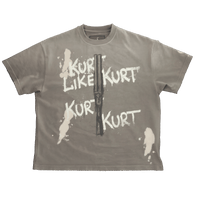
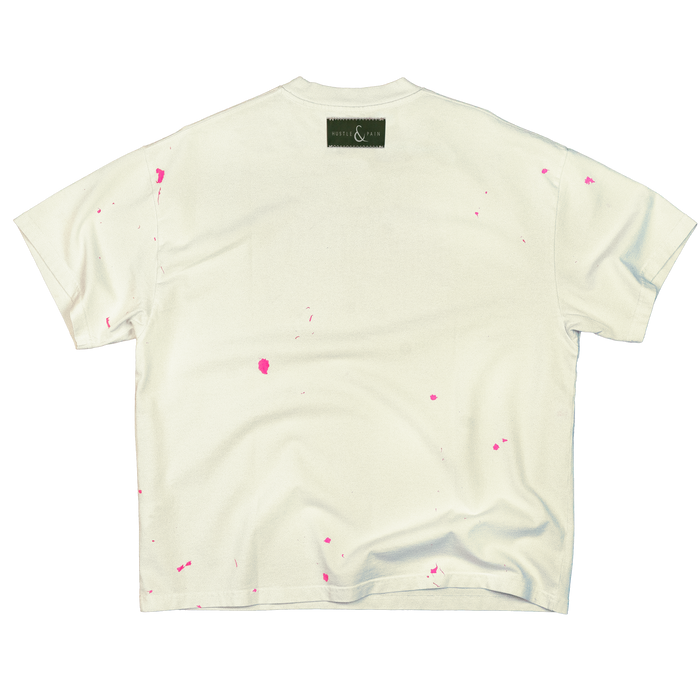
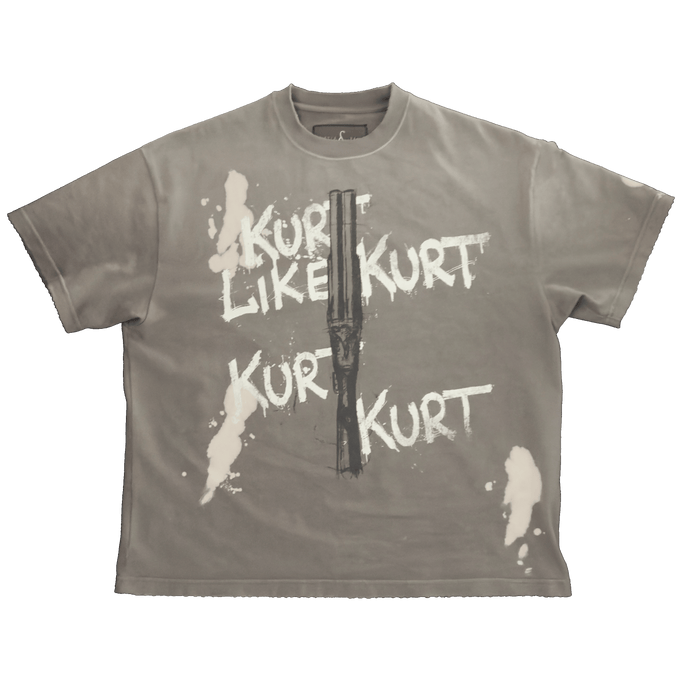
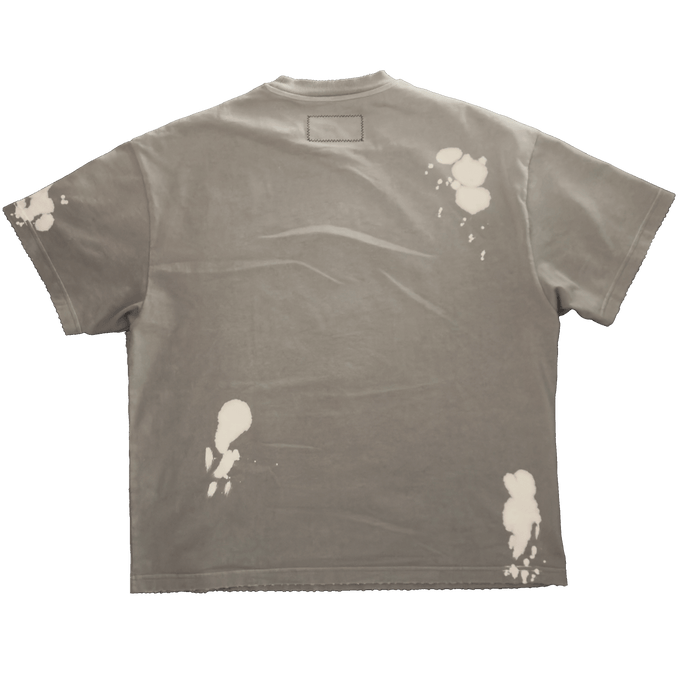
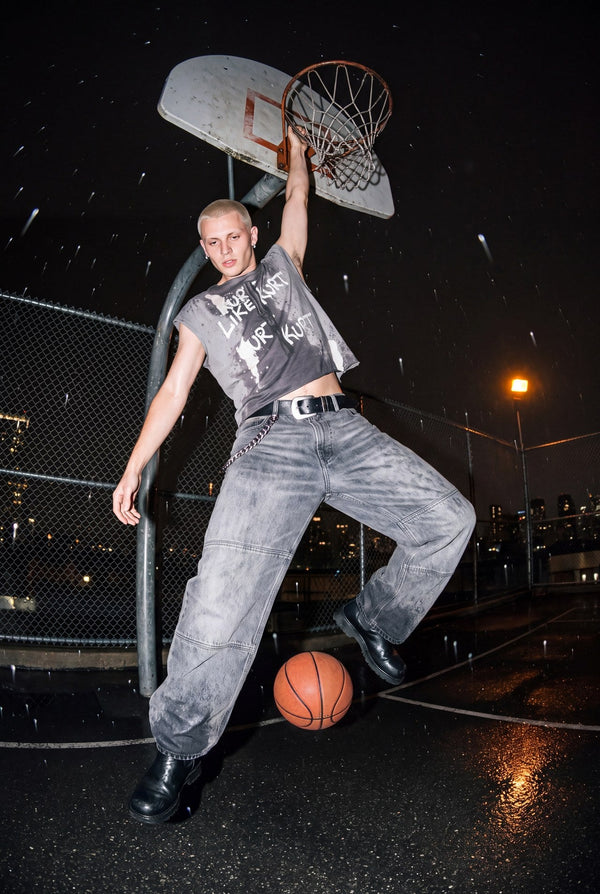
We belong on this list, but not at the top. HUSTLE&PAIN is a small label from Germany that sells in drops with small quantities, currently the collection H|W 26. At the moment the shop only has T-shirts, all unisex and 100% cotton, seven out of ten at 300 GSM. Right now we do almost all of the screen printing, bleaching and paint splashes ourselves, by hand, which is why hardly any two shirts look exactly alike. ANTAGONIST in Vintage White with pink lettering and paint splashes shows this well, and so does LIKE KURT with a sun-faded wash and bleached patches.
We’re not cheap. Our shirts start at €75, more than most of the shirts further up. You can still do the maths: €75, worn a hundred times, comes to 75 cents per wear. Some designs exist only once, others come back if enough people ask for them. You’ll find all the heavy shirts in the Heavyweight T-Shirts.
How do you spot a good small streetwear label?
Many people see hype as the best sign. The product description tells you more.
- The weight is stated. Vicinity gives 280 GSM for the Softs Tee, Multiply 240 for the oversized shirt. If the number is missing, ask, because a wide shirt in thin fabric hangs off the shoulders and clings to the body. What the number means is explained in the GSM guide.
- The printing method is named. Look out for it, because according to Wikipedia, screen printing mainly pays off for larger runs, while transfer printing handles small quantities cheaply. So a label that screen prints has really produced something. If the shipping information says “made for you”, it is usually print-on-demand with DTG or DTF. How to tell the methods apart with your thumb is in What Is Screen Printing?
- There is an Impressum with an address. Check it, because it says who is responsible for returns and complaints. That is exactly how we found out for this article that Peso and LFDY have the same company in their Impressum.
- The restock rule is clear. A good label says whether a sold-out piece comes back, because otherwise you don’t know whether you are buying a one-off or a piece that gets restocked regularly.
- Collar and hem survive the first wash. Afterwards the collar has to lie flat and the hem has to stay straight, because a badly made shirt warps right there first.
And if you’re unsure about a new label, ask where it prints. The best stories on this list start at a printing press, from the Berlin screen-printing shop in 1990 to the car boot in Dortmund.
Sources37
- Carhartt WIP: History (English)
- Carhartt WIP: Impressum
- Wikipedia: Carhartt
- Cleptomanicx: Über uns
- Cleptomanicx: shop search “Möwe” (prices as of 18 October 2026)
- HATCH: Iriedaily, brand history (1 June 2022)
- skatedeluxe: Iriedaily Online Shop (English, prices as of 18 October 2026)
- Lodown Magazine: Iriedaily x edding, Permanent Democracy (26 March 2026, English)
- Wikipedia: Picaldi
- Picaldi: Zicco 472 Herrenjeans (prices as of 18 October 2026)
- Hypebeast: Behind the Hype, Acronym’s Techwear Legacy (28 August 2020, English)
- Wikipedia: Deus Ex: Mankind Divided (English)
- Wikipedia: 032c
- LFDY: About (English)
- LFDY: Stores (English)
- LFDY: No Investors Story (English)
- LFDY: Basic 280 Tee (price as of 18 October 2026)
- LFDY: Basic Blank Hooded (price as of 18 October 2026)
- LFDY: Impressum
- Highsnobiety: Von Deutschland in die Welt, wohin geht die Reise von 6PM (15 September 2022)
- 6PM: homepage with collabs (English)
- 6PM Records: Magdalena with Yung Hurn (English)
- 6PM: T-Shirts (prices as of 18 October 2026)
- 6PM: Hoodies (prices as of 18 October 2026)
- Peso: About (English, prices as of 18 October 2026)
- Peso: Impressum
- Pegador: Über Pegador (English)
- Pegador: Impressum
- Pegador: T-Shirts (prices as of 18 October 2026)
- Pegador: Hoodies (prices as of 18 October 2026)
- Multiply Apparel: Über uns
- Multiply Apparel: Oversize T-Shirt MULTIPLY Black (as of 18 October 2026)
- Multiply Apparel: Oversize Hoodie MULTIPLY Black (as of 18 October 2026)
- Vicinity: Impressum
- Vicinity: Akimbo Lows (English, prices as of 18 October 2026)
- Vicinity: Softs Tee Black (English, as of 18 October 2026)
- Wikipedia: Siebdruck
From the article

Keep reading
-
 Style11 minWhat Is Gothic Streetwear?
-
 Style13 minWhat Goes with a Black T-Shirt?
-
 Style13 minWhat Goes with a Grey T-Shirt?